Boosting Retail Efficiency: The Power of Integrated POS Systems

Author : STAINES R 8th May 2025

In today’s fast-moving retail environment, efficiency isn’t just a competitive advantage, it’s a necessity. Customers expect smooth transactions, real-time inventory updates, and personalized service across channels. To meet these demands, retailers must adopt tools that streamline operations and enhance decision-making. One such tool at the heart of retail transformation is the integrated Point-of-Sale (POS) system.
What is an Integrated POS System?
An integrated POS system is a combination of hardware and software that helps businesses process sales, handle payments, and manage inventory, employees and customers. Compared with traditional cash registers, integrated point of sale systems enable businesses to run more efficiently by reducing manual data entry and errors, improving inventory control, and providing real-time data and reporting.
1. Real-Time Inventory Management
Inventory management can be a daunting task for any business owner, especially when managing multiple products and locations. A POS system can help you keep track of your inventory in real-time. Every time a sale is made, the system updates the inventory count automatically. This means you always know how much stock you have on hand, and you can avoid overselling or underselling your products.
2. Unified Customer Experience
A unified customer experience refers to the seamless, consistent, and integrated interactions that customers have with a brand across all touchpoints and channels. This approach ensures that every aspect of a customer’s journey, from initial awareness and engagement to post-purchase support, is cohesive and synchronized, regardless of where or how the customer interacts with the company. This enables personalized service, targeted promotions, and better customer retention.
3. Streamlined Operations
A Point-of-Sale system streamlines sales and transactions by providing a centralized platform for processing payments. With a POS system, you can accept various payment methods, including cash, credit cards, and mobile payments. This eliminates the need for separate payment terminals or manual calculations, saving time and reducing errors.
Furthermore, a POS system can also integrate with other methods, such as accounting software or customer relationship management (CRM) tools. This streamlines the entire sales process, from capturing customer information to generating invoices and receipts. Automating these tasks can speed up transactions, improve customer satisfaction, and enhance the shopping experience.
4. Smarter Reporting and Analytics
With centralized data, retailers can access detailed analytics on sales trends, customer behavior, and employee performance. These insights support better decision-making, from optimizing store layout to planning seasonal promotions and forecasting demand.
5. Enhanced Security and Compliance
Integrated POS systems often come with robust security features, including encrypted transactions, role-based access, and compliance with industry standards like PCI DSS. This helps protect sensitive customer data and reduce the risk of fraud.
Point-of-sale security (POS security) creates safe environments for customers to make purchases and complete transactions. POS security measures are crucial to prevent unauthorized users from accessing electronic payment systems and reduce the risk of credit card information theft or fraud.
6. Scalability and Flexibility
As your business grows, so do your needs. Integrated POS systems can easily scale with additional features, new store locations, or ecommerce platforms. This flexibility is essential for staying agile in a competitive market.
Common Features in Modern Integrated POS Systems
- Cloud-based access for managing operations from anywhere
- Omnichannel support for ecommerce, mobile, and in-store sales
- CRM and loyalty program integration
- Barcode scanning and inventory tracking
- Employee management tools
- Customizable dashboards and reporting
- Third-party app integrations (e.g., accounting, ERP, marketing)
Market Analysis:
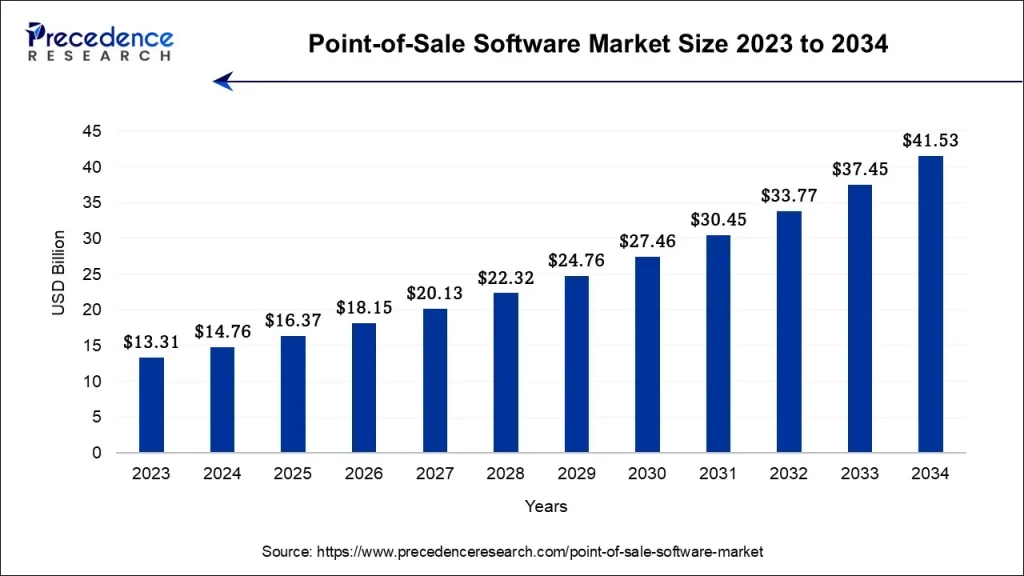
- The global point-of-sale software market size is calculated at USD 14.76 billion in 2024, grew to USD 16.37 billion in 2025, and is predicted to hit around USD 41.53 billion by 2034, poised to grow at a CAGR of 10.9% between 2024 and 2034.
- The Asia Pacific point-of-sale software market size accounted for USD 5.17 billion in 2024 and is anticipated to grow at the fastest CAGR of 11.06% during the forecast year.
Why Now is the Time to Upgrade
With rising customer expectations and increasing competition from ecommerce, traditional POS systems no longer suffice. Retailers that continue using outdated or fragmented systems risk falling behind.
Investing in an integrated POS system is not just about technology—it’s about future-proofing your business. Whether you’re a small boutique or a large chain, the right POS solution can help you operate more efficiently, delight customers, and increase profitability.
How TechAffinity Can Help
At TechAffinity, we specialize in providing cutting-edge retail technology solutions tailored to your business needs. Our integrated POS systems are designed to streamline your operations, unify your customer touchpoints, and give you the insights you need to thrive in today’s retail landscape.
Our team ensures a seamless transition and long-term value from consultation to implementation and support. Ready to boost your retail efficiency and stay ahead of the curve?
Let TechAffinity transform the way you sell. Contact us today to get started.